



How Can Laboratory Balances Prevent Allergen Cross-Contamination
Testing for food allergens is key to keep people safe and follow safety rules. Tiny amounts of allergenic ingredients can bring serious health problems too. That is why lab tools used for testing must be very clean and meet strict hygiene standards. Analytical balance manufacturers now have more pressure to design scales that lower the chance of allergen cross-contamination when weighing samples.
The U.S. FDA has made inspections tougher. It is now requiring balance pans to be easy to remove and clean and to keep contamination risks very low. Manufacturers are using better materials, special coatings, and improved cleaning features to meet these rules. It makes lab balances reliable tools that help keep food safe while giving accurate weight measurements every time.
Challenges Food Testing Labs Typically Face
Food testing labs have to work fast while following strict safety rules. They test many types of food. Testing is done strictly on food with allergens.
So, preventing contamination is a constant challenge.
· Even tiny bits of allergens left on a scale can cause wrong test results. Cleaning is even harder when samples are sticky, oily, or leave stubborn residue on metal parts.
· The FDA also requires labs to carefully record and check every cleaning step. They can slow down the work of lab while these rules keep consumers safe.
· Balance makers are creating scales that are easier to clean and reduce the chance of contamination to help with this. This helps labs to get accurate results faster without wasting time between tests.
Food testing labs face tough cleaning and safety demands. Therefore, new balance designs are making their work easier and more reliable.
Why Cross-Contamination Matters in Food Labs?
It happens when tiny amounts of biological, chemical, or allergenic material get passed from one sample, surface, or item to another. Even the smallest traces can mess up test results. In food testing, this can cause big problems like false positive or negative results, wasted time and money on retests, and product recalls that hurt customer trust and a company’s reputation.
Different types of contamination bring different risks.
· Allergen carryover might make a product unsafe but labeled as safe.
· Microbial contamination can cause false alarms or hide harmful germs.
· Chemical residues can change test results and cause data problems.
· All of these issues risk both breaking rules and harming public health.
A Laboratory Information Management System helps to prevent these problems by making contamination control part of everyday work. The system guides workers through standard procedures instead of relying on people to remember or write down steps. This helps to keep clear records proving the right checks were done.
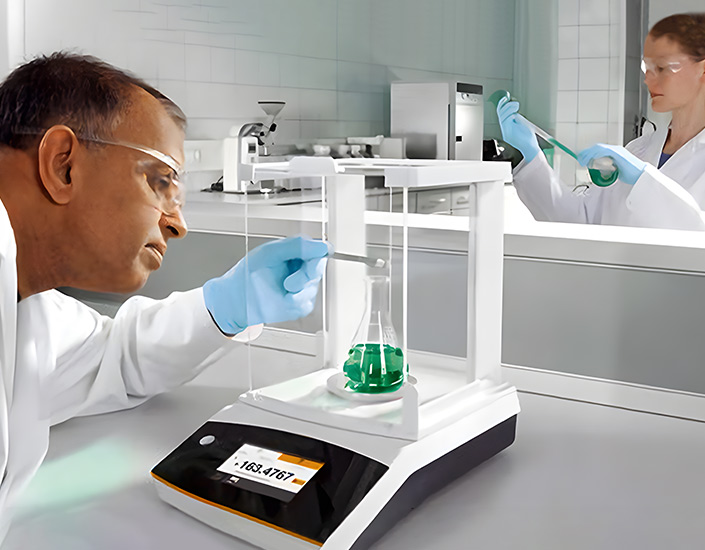
How Analytical Balance Manufacturers Can Prevent Allergen Cross-Contamination?
A laboratory balance that can prevent allergen cross-contamination does not require just precision. It also needs smart and practical design to reduce the chances of allergen cross-contamination or even germs build up.
Laboratory balances need to be easy to clean and avoid trapping food residues to keep test results accurate. This will also help to ensure the safety and smooth workflow in a lab.
316L Stainless Steel Is Great for Lab Balances
Weighing pans made from 316L stainless steel help prevent cross-contamination in food testing labs. This is because they resist rust and have a smooth and non-porous surface. It makes them easy to clean and disinfect even after handling acidic or salty foods.
The low carbon in this steel means it is less likely to be damaged during welding or by chemicals. It also stands up well to strong cleaning products.
All these qualities help to keep the pans hygienic. This helps to ensure accurate measurements and make the balances last longer. This means labs get a reliable and tough tool they can trust for many tests over time.
Nano Coatings Helps to Keep Laboratory Balances Clean and Accurate
Nano anti-stick coatings make it easier for labs to keep their balances clean and accurate. These special coatings stop food bits, powders, and sticky leftovers from sticking to the balance pan. This ultimately lowers the chance of cross-contamination between tests.
Even more, cleaning is quick and easy because the surface is very smooth. You do not need any strong chemicals or lots of scrubbing. This helps labs to avoid residue buildup. As a result, you can have more precise weighing and faster test results. These coatings also protect the balance from damage and rust which is helping it last longer while meeting food safety and FDA hygiene rules.
Quick Release Pans and UV Cleaning to Make Lab Work Faster and Cleaner
A quick-release weighing pan that you can take off in 20 seconds or less saves important time during busy testing. Technicians can clean or sterilize the pan between samples without slowing down their work.
Some balances also have automatic UV light cleaning. This uses ultraviolet light to sterilize the weighing area after each use. These help in keeping it clean without needing strong chemical cleaners.
All these carefully chosen designs make an analytical balance safer, easier to clean and maintain, and perfect for the strict needs of allergen testing.
Other Ways to Stop Allergen Cross-Contamination in Laboratories
Stopping allergen cross-contamination in food testing labs starts with handling and cleaning the balances the right way. This begins even before weighing the samples. Lab workers should wear clean coats, gloves, and other protective gear to avoid putting allergens or residues on the balance.
· Using protective mats or removable covers during weighing helps to keep the balance clean from spills, sticky stuff, or particles that could affect accuracy.
· Covering balance with a dust shield stops moisture and dust from settling on it when the balance is not being used.
· Also, using smaller containers like test tubes or small flasks for moving samples reduces the chance of spills.
Keeping a clear cleaning log is very important in labs where many people share equipment. It shows when and how cleaning was done. So, everyone knows the balance stays clean and safe.
Final Thoughts
Preventing allergen cross-contamination in food testing labs is a key for safety and accuracy. Lab balances are not just for precise weighing anymore. They are designed to help keep things clean and lower contamination risks.
Balance makers give labs tools that keep food testing safe, reliable, and efficient by using smart materials and simple designs.


We also provide customized electronic balances/ laboratory scales with special functions according to customer needs.
PRODUCTS
If you have any question, please contact us.
Tel: 0086-(0)519-85286336
Mobile: 0086-136 0612 1307
E-mail: weighinginstru@gmail.com
Wechat/Whatsapp: 0086-136 0612 1307
Add: Huayuan Road, Mudu Town, Jiangsu Province, PRC