



Digital Scales vs. Mechanical Scales: How Test Weights Ensure Precision Across Devices
There are two main types of scales: mechanical scales and digital scales. Both are used to accurately measure the weights in industries, laboratories, and even in homes. Both types of scales have distinct properties and advantages; however, the most important thing is to know the precision and accuracy of the scale being used. Here comes the need for test weights. Test weights verify and maintain the accuracy of your scales, whether they’re mechanical or digital.
In this article, we will look through the major differences between mechanical and digital scales and how test weights play a crucial role in accurately calibrating both types of scales and ensuring precision.
Digital Scales vs. Mechanical Scales
• Mode of Work
Digital scales use electronic components such as load cells and microprocessors to measure the weight. When an object is placed on the scale, the force is converted into an electrical signal by load cells. The electrical signals are then translated into a digital display. Digital scales offer quick readings with high precision. Some additional features of digital scales include the tare function and unit conversions.
Mechanical scales, on the other hand, rely on physical systems. The common mechanisms include the use of springs, levers, or counterweights. In a counterweight mechanism, the object’s weight is compared to known masses on the opposite side, and the two sides of the lever are balanced. However, the spring measures the amount of force exerted on it. Mechanical scales are known for simplicity, durability, and independence from power sources.
• Accuracy
Digital scales are more precise because they offer readings down to small units such as grams and milligrams. Moreover, these scales are less prone to mechanical wear and tear, thus providing accurate measurements over a long time.
Mechanical scales are considered less precise as compared to digital scales. These mechanical scales are more prone to wear and tear, which can affect long-term accuracy. Mechanical scales can be accurate if properly calibrated and maintained.
• Usage
Digital scales are more frequently used in fast-paced environments such as labs and commercial kitchens. This is because of the user-friendly interface, tare function, and automatic calibration features.
Mechanical scales are used in conditions where electricity is not available because mechanical scales do not require any batteries or power supply to be operated.
• Maintenance
Digital scales need battery replacement and recalibration to maintain long-term precision and accuracy. Furthermore, digital scales are less prone to mechanical wear and tear as compared to mechanical scales.
Mechanical scales are durable, but some mechanical factors, such as spring fatigue and friction in moving parts, may cause variations in the readings. Therefore, it is advised to calibrate the mechanical scales more frequently to maintain long-term precision and accuracy.
The Role of Test Weights
Regardless of the type of scale you use, regular calibration with test weights is essential to maintain accuracy over time. Digital scales and balances drift over time due to environmental factors such as temperature changes, electrical noise, and mechanical wear. Similarly, mechanical scales and balances lose their accuracy over time due to spring fatigue, mechanical wear and tear, and tension in moving parts after extensive use. Therefore, it is crucial to calibrate both mechanical and digital scales regularly with suitable test weights to restore and maintain precision.
W & J Instruments provides a wide range of high-quality test weights that can be used to calibrate both digital and mechanical scales. You can use the appropriate test weights to accurately calibrate your instruments, whether mechanical or digital.
Calibration of Digital Scales
Digital scales usually feature an internal calibration mechanism. A quick calibration and adjustment can be performed with a click of a button. However, this easy calibration process cannot be performed with test weights. A test weight is necessary to calibrate even the most modern and sophisticated scales.
In the process of calibration, an appropriate test weight of a known mass is placed on the balance, and the measured value is compared with the expected value. If there is any deviation, the adjustment is made using an automatic internal calibration system.
Digital scales are often used in settings like pharmaceuticals and labs, where precision is everything. Therefore, regular calibration with certified test weights can prevent faulty data and costly errors.
W & J Instruments provides specialized high-quality test weights that can be used to calibrate a wide range of digital scales with utmost accuracy.
Calibration of Mechanical Scales
While mechanical scales are considered less complicated than digital scales. They are also susceptible to drift over time. Mechanical stress, temperature changes, and prolonged use can change the spring’s elasticity. This results in inaccurate measurements and faulty results. Therefore, calibration and readjustment of mechanical scales are also essential to maintain accuracy.
In the same way as digital scales, mechanical scales are also calibrated by the use of appropriate test weights. A test weight of known mass is placed on the scale, and the reading is compared with that of the test weight. If the scale is reading heavy or light, the technician makes physical adjustments to restore the readings to the standard point.
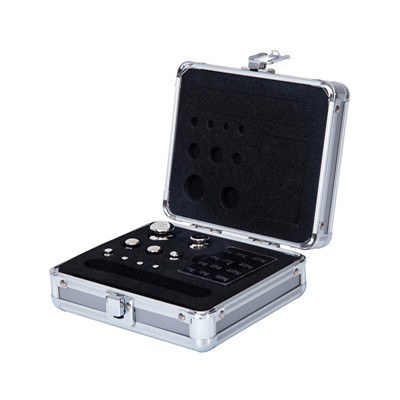
W & J Instruments provides a wide range of high-quality stainless steel and brass test weights that can be used to calibrate rugged mechanical scales in different industrial settings.
Conclusion
Both digital and mechanical scales are being used exclusively in various industries according to their features and needs. Whether you are using a modern, sophisticated digital scale or a mechanical scale, both types of scales are prone to drifts in precision over time. Without regular calibration with test weights, your modern digital scales can give unreliable results. Therefore, it is essential to calibrate both types of scales using appropriate methods and test weights.
W & J Instruments helps you achieve your goals of accurate measurements with high precision. They provide a wide range of test weights that are suitable for calibrating both digital and mechanical scales with maximum accuracy.


We also provide customized electronic balances/ laboratory scales with special functions according to customer needs.
PRODUCTS
If you have any question, please contact us.
Tel: 0086-(0)519-85286336
Mobile: 0086-136 0612 1307
E-mail: weighinginstru@gmail.com
Wechat/Whatsapp: 0086-136 0612 1307
Add: Huayuan Road, Mudu Town, Jiangsu Province, PRC