



Laboratory precision balance installation: table, temperature, humidity, and shockproof measures explained
Welcome to W&J Instrument! We are here to make sure you get the most accurate results with the weighing tools you are using. As a top Lab Balances Manufacturer and precision balances Supplier, we put our energy into making measurements simple, reliable, and accurate. Our team is always ready to help you find the right balance for your needs and guide you on how to use it properly.
One of the most important tools in laboratories is the precision balance. Whether you are weighing chemical samples, pharmaceutical products, or food ingredients, accurate measurements are vital for reliable results. However, even the most advanced precision balance can give inaccurate readings if it is not installed properly.
In this article, we will discuss the most common mistakes during precision balance installation and how to avoid them. We will explain how factors like countertop stability, temperature, humidity, and vibrations influence balance performance.
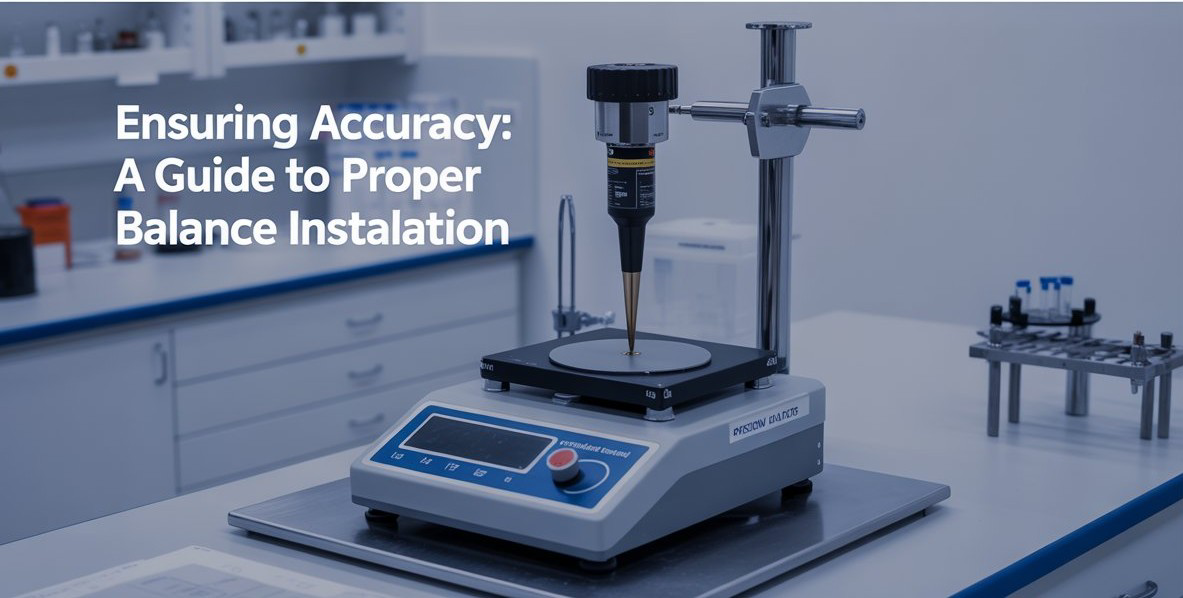
Countertop Selection
One of the main mistakes many laboratories make is placing a precision balance on a weak or unstable countertop. If you place a balance on a weak, uneven countertop that is prone to vibration, it will directly impact your results, and you will get an inaccurate measurement. Comply with the following recommendations to avoid measurement errors.
• Avoid Lightweight Tables:
Using a thin or unstable table can cause serious issues when setting up your precision balance. The small vibrations, whether from footsteps, nearby machines, or natural building movements, can be aggravated by a weak surface. This leads to inaccurate readings and false results. If you are choosing a table, it must be heavy, solid, and well-built to reduce external disturbances.
• Choose strong and heavy countertops:
Stone or specially designed balance tables are ideal. They absorb vibrations instead of passing them to the balance. The countertop should be solid, rigid, and heavy. Stone-topped tables, solid-core concrete benches, or dedicated balance tables with thick tops are perfect. Place it against a load-bearing wall for added stability. Avoid placing in the middle of the room.
• Flat and leveled surface:
Always check that the countertop is evenly leveled. If it is uneven, the balance will give false readings because the gravitational force will not act equally on the load cell. Use the adjustable feet on the balance in addition to the built-in spirit level. Check the levelness periodically, especially after moving the table or instrument.
• Dedicated Space:
The balance table should only be used for the balance. If you use it for other purposes, like keeping extra items on it, you may disturb the balance. Even a small bump to the table or the weight of heavy objects placed on table can affect its calibration.
Temperature
Temperature changes may seem harmless, but they can seriously affect sensitive balances. Precision balances are manufactured and calibrated at specific temperatures. Even small shifts in room temperature can cause the balance parts to expand or contract, leading to errors in measurement.
• Avoid Direct Sunlight:
Never place a balance near a window where the sunlight approaches directly. The direction of sunlight can heat the instrument as well as the weight being measured. This change of temperature can expand or contract the matter, resulting in weighing errors.
• Air conditioners and heaters:
A strong flow of hot or cold air from an air Conditioner or heater can make the balance unstable. The air movements push against the balance pan and cause a shift in the reading, leading to inaccurate results.
• Ideal Placement:
The goal is a stable, consistent temperature. Keep balances in rooms with maintained temperature. Choose a location away from drafts and heat sources. Most balances perform best in a room maintained at a steady 20°C ±2°C. If possible, set up a dedicated weighing room with minimal temperature fluctuation.
Humidity
Humidity is another common problem that people often ignore. Too much or too little humidity in the air can affect both the equipment and the sample, resulting in faulty measurements.
• High Humidity:
High humidity can lead to condensation, which affects both the sample and the internal components. Too much moisture in the air can damage sensitive equipment, cause rust, or make electronic parts less reliable. It can also affect the quality of samples, especially powders or chemicals, by making them clump together, leading to inaccurate weighing.
• Low Humidity:
Extremely low humidity can promote static electricity, which causes the display to drift. It also affects the sensors of the balance and makes weighing difficult, especially for fine powders.
• Best Practice:
Keeping humidity at the right level helps protect both your balance and your samples. Furthermore, it ensures the accuracy and consistency of the results. Keep humidity between 45% and 60% for most laboratory balances. Use a dehumidifier or humidifier if needed. This simple step protects your samples and extends the lifespan of your balance.
Anti-Vibration Measures
Vibration is a challenging environmental factor to control. Even with the right countertop, balances remain sensitive to vibrations. The sources of vibration include footsteps, centrifuges, slamming doors, and even traffic or construction outside the building. These tiny vibrations are picked up by the sensitive mechanism of the balance, resulting in measurement errors.
• The Bump Test:
You can perform an easy test before finalizing the location for your precision balance. Place a glass of water on the spot. Watch the surface of the water. If you see ripples, the location is too vibratory for precision work. You can find a site with minimum vibration and place your balance there.
• Anti-Vibration Table:
Specially designed tables containing dampening materials can be used to reduce vibrations. These tables use heavy masses and damping systems to isolate the balance from floor-borne vibrations.
• Anti-Vibration Pads:
For moderate vibrations, high-density polymer anti-vibration pads can be used. These pads are placed under the balance's feet to absorb any vibrations.
Conclusion:
A precision balance is a sensitive device. It reacts to environmental factors and changes around it. Therefore, proper installation of the precision balance and proper management of environmental factors are a prerequisite to achieving accuracy in your measurements.
It is important to work with a good Lab Balances Manufacturer and to know all the relevant information regarding the proper installation, handling and use of the balances. W&J Instrument is a leading Precision Balances Supplier that provides you with the great tools and helpful advice you need.


We also provide customized electronic balances/ laboratory scales with special functions according to customer needs.
PRODUCTS
If you have any question, please contact us.
Tel: 0086-(0)519-85286336
Mobile: 0086-136 0612 1307
E-mail: weighinginstru@gmail.com
Wechat/Whatsapp: 0086-136 0612 1307
Add: Huayuan Road, Mudu Town, Jiangsu Province, PRC